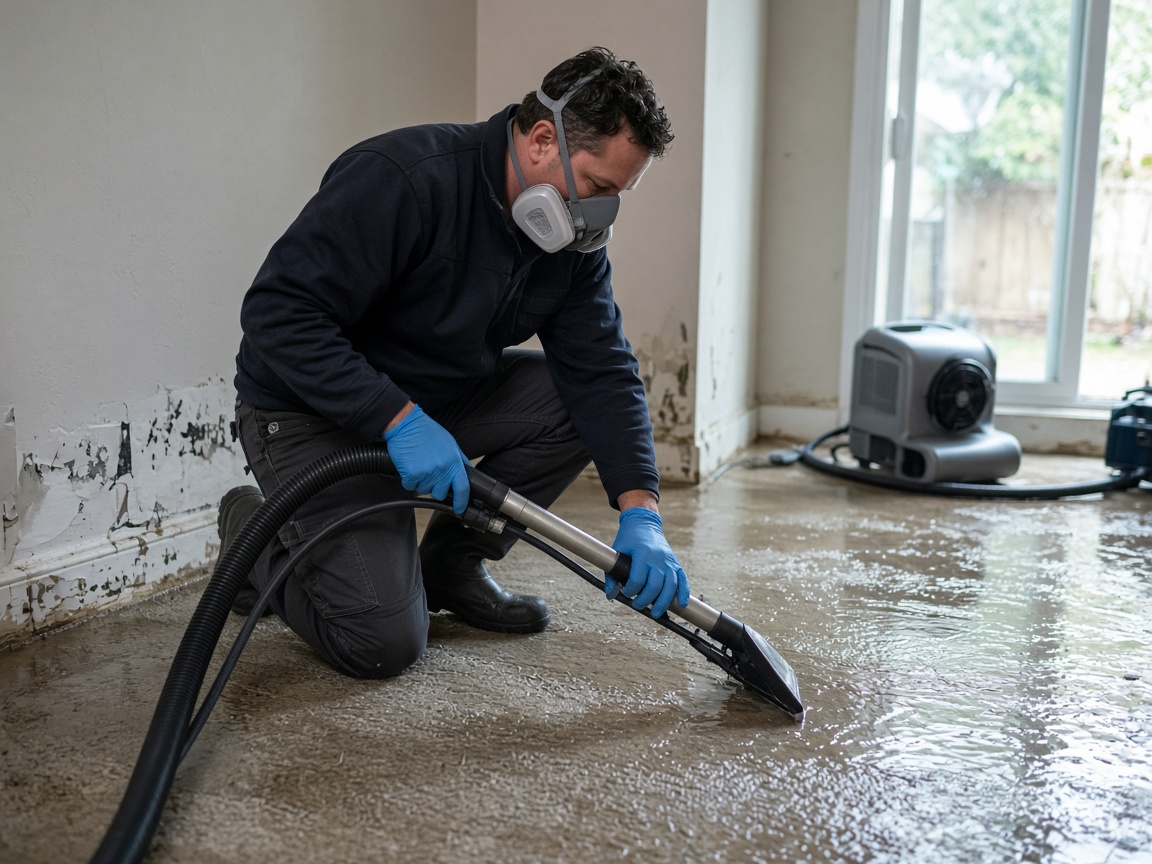
Stockton’s hot-summer Mediterranean climate means standing water in crawl spaces or behind walls can turn into a mold problem within forty-eight hours once temperatures climb. Older single-family homes in West Stockton and around the University of the Pacific often have balloon-framed walls and limited access points, so technicians must open more drywall than they would in newer construction to reach every wet cavity. Properties near the Stockton Channel also face occasional backflow from the waterway after heavy rain, requiring extraction equipment that can handle both fresh and slightly contaminated water.
Lincoln Village homes built in the 1950s and 1960s commonly have slab-on-grade foundations with post-tension cables, so any water that reaches the slab edge demands careful moisture mapping to avoid cutting rebar. Technicians carry both air movers and low-grain dehumidifiers sized for the region’s humidity spikes, because simply running fans is not enough once relative humidity stays above 60 percent for more than a day. Jobs in Downtown Stockton frequently involve multi-unit buildings where water migrates through shared plumbing chases, requiring coordination with upstairs and downstairs units before drying can finish.
San Joaquin County building practices from earlier decades left many attics with minimal insulation, so ceiling leaks from roof penetrations spread quickly across joist bays. Restoration crews document every moisture reading on a grid map so insurance adjusters can see exactly which materials were removed and why. After drying, crews reinstall baseboard and texture to match the original finish rather than leaving visible patches that homeowners later have to repaint.
Technician insight
In Stockton the thing that catches most people out with water damage restoration is how fast mold appears once our hot-summer Mediterranean temperatures hit older balloon-framed homes near the Stockton Channel; water that sits behind plaster for even two days forces us to open more walls than homeowners expect.
Lincoln Village Slab Leak
Water from a slab leak migrated under the living-room floor of a 1960s Lincoln Village home. Thermal imaging showed moisture traveling along post-tension cables toward the garage. Crews extracted the water, dried the slab edge for five days, and replaced only the affected section of flooring without disturbing the rest of the house.
Water Damage Restoration Service Services We Offer
✓Emergency Water Extraction
Removes standing water from floors and carpets in Downtown Stockton and Lincoln Village homes before it reaches subfloors or slab edges.
✓Structural Drying and Dehumidification
Uses industrial air movers and low-grain dehumidifiers sized for Stockton’s summer humidity to dry wall cavities and hardwood without warping.
✓Mold Prevention After Water Damage
Applies EPA-registered antimicrobials and runs HEPA air scrubbers in West Stockton homes where heat accelerates spore growth within forty-eight hours.
✓Carpet and Pad Replacement
Removes and disposes of saturated carpet and pad, then installs new materials matched to the home’s existing style in San Joaquin County residences.
✓Basement and Crawl Space Restoration
Extracts water from below-grade spaces common in older Stockton properties near the Stockton Channel and installs vapor barriers to limit future moisture.
Water Damage Restoration Service Cost in Stockton, CA
| Service | Typical Range | What Affects It |
|---|---|---|
| Emergency Water Extraction | $600–$1,800 | Varies with water depth and number of rooms affected |
| Full Structural Drying | $900–$2,400 | Depends on square footage and whether slab or crawl space is involved |
| Mold Prevention Treatment | $350–$750 | Added when humidity and heat have already begun spore growth |
| Carpet And Pad Removal | $400–$900 | Includes disposal and varies by room size |
Ranges are typical for Stockton, CA and confirmed with an exact written quote before any work starts.
How it works
- 1
Arrival And Containment
Technicians arrive in Stockton, set up containment barriers, and stop the water source before mapping moisture with thermal cameras.
- 2
Water Removal
High-capacity pumps and wands extract standing water from floors, carpets, and cavities in the affected Downtown or West Stockton property.
- 3
Drying And Monitoring
Air movers and dehumidifiers run while daily moisture readings track progress until materials reach dry standard.
- 4
Cleanup And Reconstruction
Remove damaged drywall and flooring, then reinstall finishes to match the original construction in the home.
Pricing
Upfront written quotes after inspection; final price depends on water volume, affected square footage, and whether hidden cavities require opening.