2026-11-12 · Javier Soto
Checking Crawl Spaces for Hidden Water Damage in Older Stockton Properties
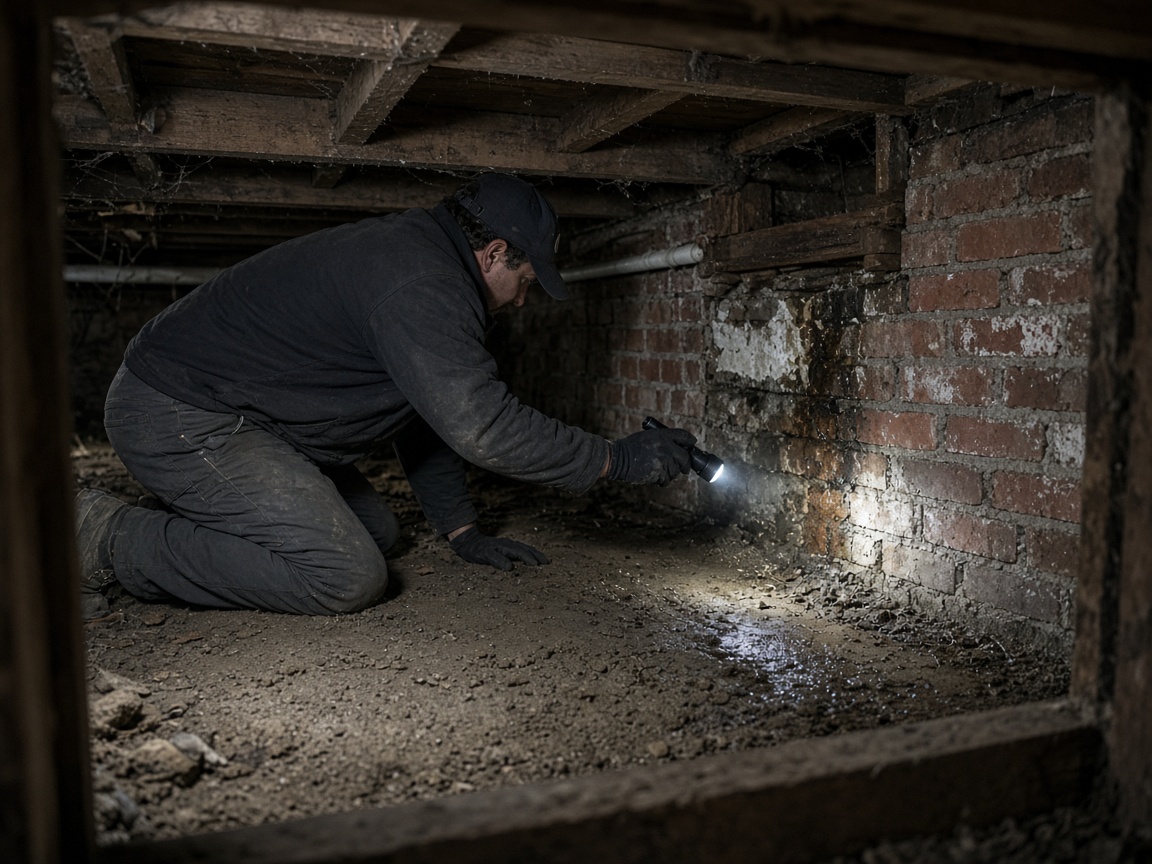
In older Stockton properties built before 1970, checking crawl spaces for hidden water damage starts with a visual and moisture-meter inspection that takes 45-90 minutes, focusing on soil moisture levels above 15% and wood rot in joists near the Stockton Channel or University of the Pacific areas.
Why Crawl Spaces in Stockton Homes Accumulate Hidden Damage
Stockton's hot-summer Mediterranean climate brings concentrated winter rains that saturate the clay-heavy soils common in West Stockton and Lincoln Village. Older homes here often sit on raised foundations with crawl spaces 18-36 inches high, where poor ventilation allows moisture to linger for weeks after storms. Properties near the San Joaquin River face additional runoff that seeps under slabs, softening subfloor wood over 8-15 years. The age of housing stock in Downtown Stockton means many lack modern vapor barriers, turning small leaks from plumbing or grading issues into widespread rot before homeowners notice musty odors upstairs.
Signs of Water Damage in Crawl Spaces
Look for dark staining on sill plates, white powdery efflorescence on concrete piers, and sagging insulation that has absorbed water. In San Joaquin County homes, warped floorboards above the crawl space or increased humidity in living areas during spring often trace back to these hidden spots. Use a moisture meter to check joists; readings consistently above 12% signal ongoing problems from seasonal rains that affect Lodi and Manteca properties similarly. Mold growth on ductwork or pest activity around wet soil also points to long-term water intrusion that standard visual checks from the exterior miss.
Step-by-Step Inspection Process
Begin by accessing the crawl space through an exterior hatch or interior closet, wearing protective gear and using a headlamp. Measure and record moisture at multiple points along the perimeter and center, noting any standing water or soft spots in the soil. Check for adequate ventilation—Stockton homes need at least one vent per 150 square feet—and inspect for proper slope away from the foundation to prevent pooling. Document any insulation that feels damp or has collapsed, then test nearby pipes for condensation that worsens during the cooler winter months. This methodical approach reveals issues early in neighborhoods with older stock like West Stockton.
Impact of Stockton's Climate and Terrain
The hot-summer Mediterranean climate creates wet winters followed by dry summers that cause soil expansion and contraction, cracking foundations in older San Joaquin County homes. Properties in low-lying areas near the Stockton Channel experience higher groundwater tables that keep crawl spaces damp year-round. Winter storms can deliver 2-4 inches of rain in short periods, overwhelming gutters and directing water under homes in Lincoln Village. These patterns differ from nearby Lodi and Manteca due to Stockton's denser urban runoff, making regular crawl space checks essential after each rainy season to catch damage before it reaches living spaces.
Homeowners in Stockton can apply these inspection steps themselves but should contact professionals for Water Damage Restoration when moisture readings exceed safe levels. See how local winter patterns play out in How Stockton Winter Storms Affect Homes Near the San Joaquin River and review Local Factors That Influence Water Damage Restoration Costs in Stockton for context on repairs. Our team based at 2334 Stagecoach Rd Ste J, Stockton, CA 95215 operates Mon–Fri 8am–6pm, Sat 9am–2pm to support these assessments in the community.